
This week’s Torah portion is called Shemot (Exodus 1:1–6:1) which in Hebrew means “names.” Genesis closed with the descendants of Jacob living in the land of Egypt, waiting out the period of famine that had overtaken the region. What started as a temporary move turned into a centuries-long stay. We do not know the exact time interval separating Joseph from Moses. The Bible says a Pharaoh arose who “did not know Joseph” (1:8). The new Pharaoh was not beholden to the Israelites. The history of Joseph’s service was long forgotten, which meant the Israelites lost their protected status as the relatives of a national hero.
Subscribe to Bible Fiber’s Youtube channel or Follow Bible Fiber wherever you listen to your podcasts!
Goshen no longer hosted just Jacob and his descendants. That original generation of 70 refugees passed away. But they were an “exceedingly fruitful” people, fanning out over the Nile Delta. They grew so large that the native Egyptians felt threatened by their size. The first words out of the new Pharaoh’s mouth were: “Look, the Israelite people are more numerous and more powerful than we. Come, let us deal shrewdly with them, or they will increase and, in the event of war, join our enemies and fight against us and escape from the land” (1:9–10).
From the moment the fear of the Hebrews began to fester in Egyptian hearts, things did not go well for the people of Goshen. Infant murder, oppression, and slavery were coming. But why did Pharaoh fear a farming people living separately? The Hebrews had not risen up in revolt. They were not plotting insurrection. They were trying to work, worship God, and live in peace. The principal accusation was only that they were having too many children.
The Hyksos Memory
If Pharaoh seemed paranoid about foreigners, Egyptian history justified his fear. In the 18th century BCE, a group of foreigners known as the Hyksos began migrating into the Nile Delta. While their exact origins remain a mystery, they were Northwestern Semites—people from the same general region and linguistic background as Jacob’s family. Some may have fled drought in Canaan, while others arrived as merchants and stayed.
The Hyksos did not stage a sudden coup. Instead, they took advantage of power vacuums. They gradually infiltrated Egyptian society and eventually established their own dynasty, ruling Northern Egypt for about 150 years. They maintained their power with superior military technology, including chariots and composite bows.
Native Egyptians finally organized an anti-Hyksos revolt and expelled these foreign rulers around 1550 BCE. This victory birthed the 18th Dynasty, a line of native Egyptian warrior-kings determined to never let foreigners dominate them again. By the time of Moses, the memory of the Hyksos remained a fresh cultural scar. This background explained the specific warning Pharaoh gave in Exodus 1:10.
To Pharaoh, the Israelites were a potential “fifth column.” The “enemies” he feared were the recently expelled Hyksos, who still lived just across the border in Canaan. By enslaving the Israelites, Pharaoh intended to break their spirit and neutralize a perceived threat to his kingdom.
The Identity of Pharaoh and His Cities
The text of Exodus does not name the Pharaoh, which has led to centuries of scholarly debate. Most historians look at two main candidates based on the timeline. The “traditional” view identifies Ramses II (the Great) as the Pharaoh of the Exodus. He was a prolific builder who commissioned the city of Pi-Ramesses. Archaeologists have identified this location at Tell el-Dab’a in the eastern Nile Delta. An alternative “early date” theory points toward the 18th Dynasty, suggesting kings like Thutmose III or Amenhotep II.
Either way, the Bible likely omitted the specific name of the Pharaoh to make a theological point. In Egypt, the Pharaoh was considered a living god. By refusing to name him, the biblical author reduced him to a mere office.
The Brave Women Who Saved Moses
The Pharaoh of Exodus 1:1–6:1, whoever he was, issued a ruthless decree: every Hebrew boy born had to be thrown into the Nile River. Amid this state-sponsored genocide, Moses was born. According to the biblical narrative, his miraculous survival is credited to the bravery of five women.
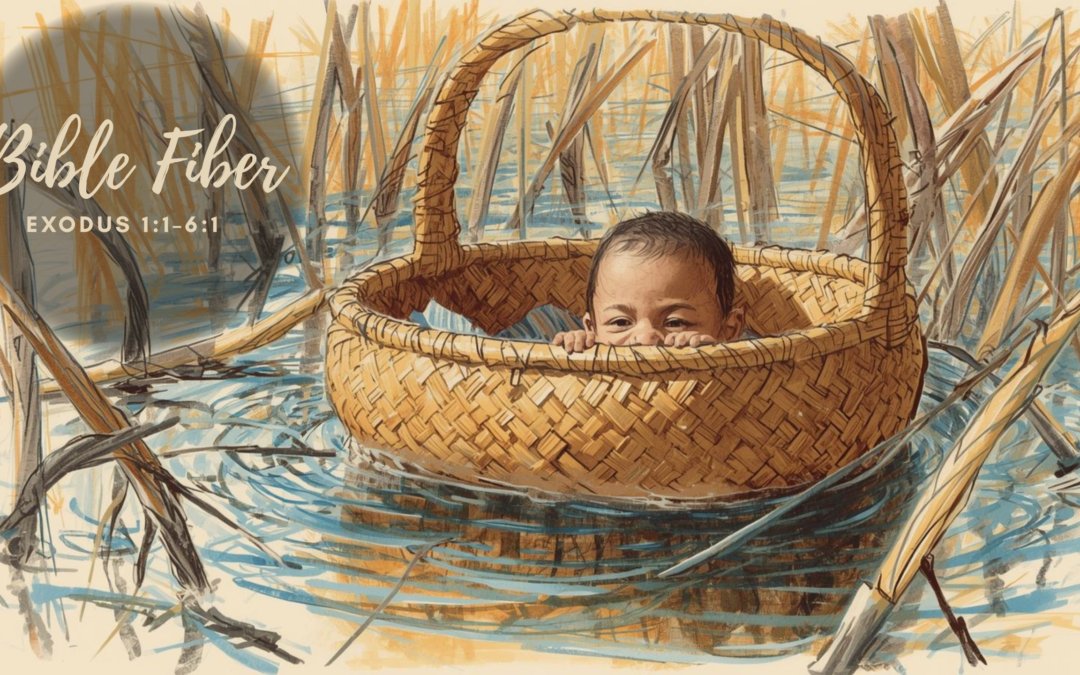
The midwives, Shiphrah and Puah, defied the Pharaoh with the “white lie” that the Hebrew women gave birth too quickly for them to interfere. Jochebed, Moses’s mother, hid him for three months in open defiance of the law. One can only imagine her terror every time a baby’s cry echoed outside her tent. When she could hide him no longer, she placed him in a basket—a tevah—among the reeds. His sister Miriam stood guard, watching over the basket as it floated near the royal bathing area.
The most unexpected act of bravery came from within Pharaoh’s own household. When Pharaoh’s daughter found the baby, she immediately recognized him as “one of the Hebrews’ children” (2:6). She knew her father’s law and the political climate of the day. Yet, she still chose to adopt Moses. Because of her, Moses grew up with the education, language, and access of an Egyptian prince. The “fifth column” Pharaoh feared came from a basket his own daughter pulled from the reeds.
The vessel used to save Moses carried great symbolic weight. In Hebrew, the word for the basket is tevah. This is the exact same word used for the “ark” of Noah. This linguistic link was not accidental. Just as the tevah of Noah saved humanity from the chaos of the floodwaters, the tevah of Moses saved the future of Israel from slavery.
The Revelation of the Name
After coming of age in the royal palace, Moses witnessed an Egyptian taskmaster beat a Hebrew slave. Filled with righteous anger and a desire for justice, Moses killed the Egyptian and hid his body (2:12). He thought no one had seen him, but the next day, when he tried to break up a fight between two Hebrew men, one of them asked if he planned to kill him just as he had killed the Egyptian. Moses realized his secret was out, so he fled the country, crossing the desert into the land of Midian.
In Midian, Moses rescued the daughters of a priest named Jethro from aggressive shepherds at a well. He eventually married Jethro’s daughter, Zipporah, started a family, and became a shepherd. One day, while leading his flock near Mount Horeb, he saw a burning bush that stayed aflame without burning to ash.
As he walked closer to investigate, God called his name from the middle of the flames. God commanded him to take off his sandals because the ground he stood on was holy. In this moment, God made his will clear. He told Moses that he had seen the suffering of the Israelites and heard their prayers for help. He announced to Moses that he was choosing him to free the Israelites and bring them out of the land of slavery.
The “Slow of Speech” Mystery
Moses felt inadequate for the calling. He told God that he could not face Pharaoh or lead the people because he was “slow of speech and slow of tongue” (4:10). Bible scholars debate what pathology afflicted Moses. Was it a lisp or a stutter or just stage fright? I prefer the theory made famous by Abraham Ibn Ezra. He argued that since Moses spent his first forty years as an Egyptian prince and the next forty as a shepherd in Midian, he simply forgot or never fully mastered the language of the Hebrews.
His primary language was the formal Egyptian of the court. That may have set him up for success in confronting the Pharaoh, but Moses was likely more worried about gaining the loyalty of the enslaved Israelites. They already did not see him as one of their own, and he could not communicate effectively with them in their own language.
When God told Moses that Aaron would be his “spokesman to the people” (4:16), the Hebrew text says Aaron would be a “mouth” for Moses. If we follow Ibn Ezra’s theory, this partnership solved the linguistic divide. Moses possessed the education and authority of the Egyptian court, making him the perfect candidate to stand before Pharaoh. However, Aaron had spent those same years living and working among the Israelites. He spoke their dialect and understood their cultural nuances. While Moses provided the divine message to Pharaoh, Aaron translated that message into the common language of the Hebrews to build their trust and loyalty.
This theory gains even more support when you look at the end of Moses’s life. In the book of Deuteronomy, Moses no longer needed a spokesman. After wandering in the wilderness for forty years, he delivered a massive series of speeches directly to the nation. By this point, he had mastered their language. He was no longer the insecure liberator who needed a translator. He spoke with authority and fluency because he finally knew his people—and he spoke to them in their own tongue.
But I am getting ahead of myself. Join me next week for the second Exodus Torah portion. It covers Exodus 6:2–9:35. I hope Bible Fiber can be of use to you if in the year 2026 you are committed to going deeper in God’s word and reading with discipline and regularity. If you would like to get the study questions that go with this episode, visit our website and sign up for the newsletter: www.thejerusalemconnection.us
Questions covering Exodus 1:1–6:1
- The Context of Fear (Exodus 1:8-10): Pharaoh feared the Israelites were a “fifth column” because the memory of the Hyksos occupation remained a cultural scar. He used this fear to justify slavery and oppression. Do you ever let past hurts or “cultural scars” dictate how you treat or view others today?
- The Bravery of Women (Exodus 1:15–2:10): Moses survived because five women chose the “fear of God” over the fear of the state. From the midwives’ civil disobedience to the Egyptian princess’s compassion, they risked everything to defy a ruthless decree. Is there a situation in your life where doing the right thing feels risky? How does their example encourage you to prioritize God’s moral law over the pressure to conform to your surrounding culture?
- Overcoming Inadequacy (Exodus 4:10-16): Moses felt inadequate because he was a linguistic outsider who likely lacked fluency in the Hebrew language. God provided Aaron as a “bridge” until Moses eventually mastered the tongue during the forty years in the wilderness. In what area of your life do you currently feel unprepared? How can you trust God to provide the help or the time you need to grow into the calling he has for you?